Delhi ecommerce brands can appear in Google AI Overviews and ChatGPT product searches by implementing Product schema with complete attributes, submitting a Google Merchant Center product feed, allowing OAI-SearchBot in robots.txt, and writing product descriptions that match conversational AI search queries. Google AI Overviews now appear on 14% of all shopping queries, and brands cited in them earn 35% more organic clicks than competitors in standard blue link positions.
Why AI Product Search Matters for Delhi Ecommerce Brands Right Now
Search intent: informational with commercial undertone. A Delhi ecommerce store owner who understands that traditional Google rankings are not enough and wants to understand the specific steps to get products into AI-generated answers.
The number tells the story. Google AI Overviews appeared on just 2.1% of shopping queries in November 2024. By March 2026 they covered 14% of all shopping queries, according to Visibility Labs analysis of 20.9 million shopping keywords. That is a six-fold increase in 16 months. And it is not slowing down.
For a Delhi ecommerce brand, this means the search results page for many product queries has fundamentally changed. Someone searching “best protein supplement under Rs 2,000” or “ayurvedic face wash for oily skin” now sees an AI-generated answer above every blue link, every paid ad, and every product listing. The brands appearing in that AI answer are getting the click. The brands appearing below it are competing for what is left.
And the conversion quality of AI-referred traffic makes this even more urgent. AI-referred visitors convert up to 23 times higher than traditional organic search traffic, according to research published by Prime Avenue Group in April 2026. These are buyers who have already received an AI recommendation before clicking. They arrive with intent pre-formed.
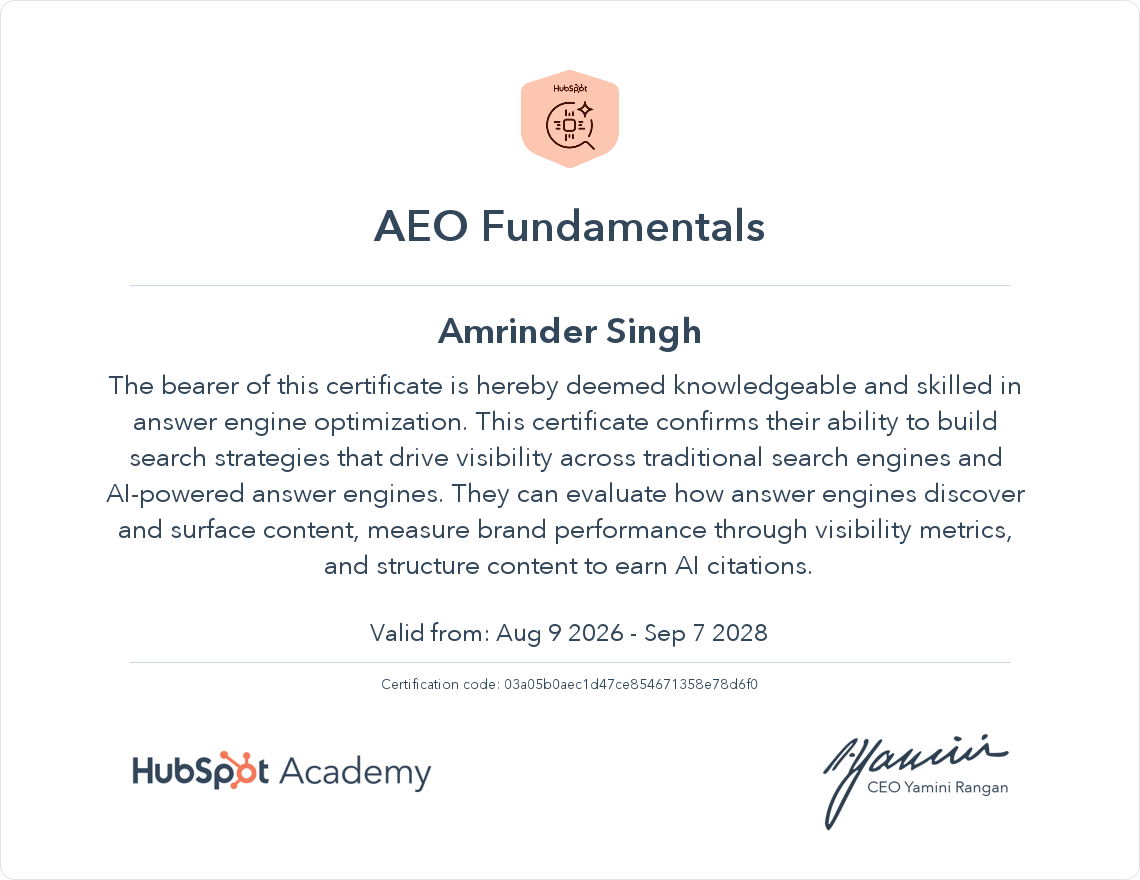
I’m Amrinder Singh, founder of Digi Ustad. Semrush AI Visibility certified. HubSpot AEO certified. 10 years working with ecommerce brands in Delhi and internationally. The Delhi brands getting into AI product searches right now are not the biggest, they are the ones that moved first on the technical setup that most WooCommerce and Shopify stores have never touched.
How Does Google AI Overviews Decide Which Delhi Products to Show?
Google AI Overviews selects products for its shopping answers based on four primary signals: structured product data quality, Google Merchant Center feed completeness, content that matches conversational shopping queries, and third-party authority signals from reviews and citations.
Structured product data quality. Product schema on your product pages tells Google’s AI: this is a product, it costs this, it is in stock, it has these attributes. Without Product schema, Google’s AI has to guess this information from your page content. When it guesses wrong or cannot determine the information, your product is excluded from AI Shopping answers. The required schema attributes for AI Overview eligibility are: name, description, image, price, priceCurrency, availability, brand, and aggregateRating. GTINs (Global Trade Item Numbers or barcodes) are strongly recommended for manufactured products.
Google Merchant Center feed. This is the most direct path to AI Shopping visibility for Delhi ecommerce brands. Google AI Overviews shopping features draw heavily from Merchant Center product feeds. A feed with complete attributes, accurate pricing, current availability status, and high-quality images consistently outperforms organic product schema alone. 83% of ChatGPT’s shopping carousel data pulls directly from Google Shopping feeds, according to Prime Avenue Group research, meaning a well-configured Merchant Center feed serves both Google AI Overviews and ChatGPT simultaneously.
Conversational product content. Delhi ecommerce product descriptions written for keyword density (“protein powder whey concentrate 1kg gym”) do not match how AI shopping searches are phrased (“best protein powder for beginners under Rs 2,000 in India”). AI systems weight factual specificity and conversational intent. Rewriting product descriptions to answer the questions buyers actually ask produces measurable AI Overview citation improvements within 6 to 10 weeks.
Third-party authority. Review count and quality, press mentions, comparison site citations, and community mentions across Reddit, Quora, and Indian ecommerce forums all contribute to the authority signal that determines whether Google’s AI trusts your product information enough to cite it.
What Is the Difference Between Google AI Overviews and ChatGPT for Delhi Ecommerce?
Google AI Overviews and ChatGPT use different data sources for product recommendations, which means Delhi ecommerce brands need a slightly different technical setup for each.
Google AI Overviews is directly connected to Google’s crawl index, Google Merchant Center, and Google Shopping. It weights structured data (Product schema), Merchant Center feed quality, and the same authority signals as traditional Google search ranking. Getting into Google AI Overviews for product searches is an extension of your existing Google SEO and Merchant Center work, done correctly.
ChatGPT product search draws from two sources: its training data plus real-time browsing via OAI-SearchBot, and the Shopify product catalog integration ChatGPT launched in 2025. For Delhi WooCommerce stores, the most important technical step is allowing OAI-SearchBot in robots.txt. If the bot cannot crawl your product pages, ChatGPT cannot surface your products regardless of how optimised your Google presence is. For Shopify stores, the Shopify-ChatGPT integration means your Shopify product feed is potentially visible in ChatGPT shopping without additional configuration, but only if your product data is clean and complete.
Perplexity weights real-time web content and emphasises recency and direct citations. Delhi ecommerce brands that publish regular product comparison content, buyer guides, and FAQ articles on their site are more likely to be cited in Perplexity product searches than brands with only product and category pages.
Platform | Primary Data Source | Key Technical Fix | Timeline to Citation |
Google AI Overviews | Google index + GMC feed | Product schema + complete Merchant Center feed | 4 to 8 weeks |
ChatGPT | OAI-SearchBot + Shopify catalog | Allow OAI-SearchBot in robots.txt | 6 to 10 weeks |
Perplexity | Real-time web crawl | Product FAQ content + schema | 3 to 6 weeks |
Gemini | Google index + Shopping Graph | Same as Google AI Overviews | 4 to 8 weeks |
How to Get a Delhi WooCommerce or Shopify Store Into AI Product Searches, Step by Step
Step 1: Audit your robots.txt for AI crawler access
Open yourdomain.com/robots.txt. Check for blocks on these AI crawlers:
- OAI-SearchBot (ChatGPT product crawling)
- GPTBot (ChatGPT general crawling)
- Google-Extended (Google AI training)
- PerplexityBot (Perplexity)
If any of these appear with Disallow: /, remove the block and add explicit Allow rules. This single fix takes 10 minutes and is the prerequisite for ChatGPT product visibility.
Step 2: Implement Product schema on every product page
For WooCommerce: install a schema plugin such as Schema Pro, RankMath Pro, or Yoast WooCommerce SEO. Configure it to output Product schema automatically on all product pages with price, availability, currency, brand, and aggregateRating attributes.
For Shopify: most themes include basic Product schema, but check that price, availability, and aggregateRating are being output correctly via Google’s Rich Results Test at search.google.com/test/rich-results.
Step 3: Set up and optimise Google Merchant Center
Go to merchants.google.com and create a Merchant Center account. Add your Delhi business details, verify your website, and set up a product feed. For WooCommerce, the WooCommerce Google Listings and Ads plugin generates the feed automatically. For Shopify, use the Google and YouTube app from the Shopify app store.
The feed quality checklist for AI Overview eligibility:
- Product titles: brand + key descriptor + size/variant (not just the product name)
- Descriptions: 150 to 500 words, written for how buyers search
- Images: minimum 800×800 pixels, white background for apparel
- GTINs: include for all manufactured products with barcodes
- Availability: must match real-time stock status
Step 4: Rewrite product descriptions for conversational AI search
Traditional product description: “Premium whey protein concentrate with 24g protein per serving. Available in chocolate and vanilla flavours.”
AI-optimised product description: “This whey protein concentrate delivers 24g protein per 30g serving, making it one of the higher-protein options available under Rs 2,000. Suitable for beginners and intermediate gym-goers. Chocolate flavour uses natural cocoa. Dissolves in 30 seconds with a shaker. Ships within 24 hours from our Delhi warehouse.”
The second version answers the questions a buyer asks an AI assistant before purchasing. It matches conversational search patterns and includes specifics (price context, user type, shipping detail) that AI systems extract and cite.
Step 5: Add Product FAQ content to category pages
Category pages are underused by Delhi ecommerce brands for AI Overview visibility. A category page for “Ayurvedic face wash for oily skin” that includes a FAQ section answering “which ayurvedic face wash is best for oily skin” and “does ayurvedic face wash control oil better than chemical cleansers” is far more likely to be cited in AI Overview answers for those queries than a category page with only a product grid.
Step 6: Set up GA4 AI referral tracking
Create a custom channel group in GA4 matching chatgpt.com, perplexity.ai, gemini.google.com, and copilot.microsoft.com as a distinct AI Referrals channel. This is the measurement layer that confirms AI ecommerce work is producing measurable traffic, not just mentions in AI answers.
[INSERT SCREENSHOT: GA4 showing AI referral channel with chatgpt.com sessions for Delhi ecommerce client] ALT text: “GA4 custom channel showing ChatGPT and Perplexity referral sessions for Delhi ecommerce store, Digi Ustad AI SEO results”
The Unique Insight, Delhi Ecommerce Brands Have a Specific AI Search Advantage Right Now
Every AI ecommerce guide focuses on global English-language searches. None of them cover what makes Delhi ecommerce brands specifically positioned to win AI product searches for Indian-specific queries.
When a buyer asks Google AI Overviews or ChatGPT “best ayurvedic supplement for joint pain under Rs 1,500” or “organic cold pressed mustard oil 5 litre Delhi delivery,” these are queries where the brand that ships from Delhi, manufactures in India, and has India-specific product content is more contextually relevant than an international brand.
Google’s AI Overviews weight geographic and contextual relevance. A Delhi ecommerce brand with a WooCommerce store that includes:
- Product descriptions mentioning Delhi delivery and India-specific attributes
- FAQ content answering India-specific buyer questions (GST-inclusive pricing, Cash on Delivery availability, return policy in India)
- Merchant Center feed with INR pricing and Indian availability signals
…is significantly more likely to be cited for Indian product queries than a foreign brand with superior general SEO but no India-specific content context.
This is the AI search advantage that Delhi ecommerce brands should be building right now, before pan-India competitors with bigger budgets start the same work. For the full AI-driven product discovery for online stores methodology covering Delhi and pan-India ecommerce brands, see the dedicated service page.
FAQ, Delhi Ecommerce, Google AI Overviews, and ChatGPT Product Searches
How do Delhi ecommerce brands appear in Google AI Overviews for product searches?
Delhi ecommerce brands appear in Google AI Overviews by implementing Product schema with complete attributes on every product page, submitting a high-quality Google Merchant Center feed with INR pricing and current availability, and writing product descriptions that match conversational AI search queries. Google AI Overviews now appear on 14% of all shopping queries and brands cited in them earn 35% more organic clicks than competitors in standard search positions.
Does Google Merchant Center affect ChatGPT product search visibility?
Yes. 83% of ChatGPT’s shopping carousel data pulls directly from Google Shopping feeds, according to Prime Avenue Group research from April 2026. A well-configured Google Merchant Center feed with complete product attributes, accurate pricing, and high-quality images serves both Google AI Overviews and ChatGPT product searches simultaneously. Delhi ecommerce brands that complete their Merchant Center feed setup see ChatGPT and Google AI Overview visibility from the same feed.
What is OAI-SearchBot and why do Delhi ecommerce stores need to allow it?
OAI-SearchBot is ChatGPT’s product search crawler. If OAI-SearchBot appears in your robots.txt with Disallow: /, ChatGPT cannot crawl your product pages and your products cannot appear in ChatGPT shopping recommendations regardless of how optimised your Google presence is. Allowing OAI-SearchBot in robots.txt takes 10 minutes and is the single most important technical fix for Delhi ecommerce brands seeking ChatGPT product visibility.
How long does it take for a Delhi ecommerce store to appear in Google AI Overviews?
Delhi WooCommerce and Shopify stores typically see first Google AI Overview product citations within 4 to 8 weeks of implementing Product schema and submitting a complete Google Merchant Center feed. Category page FAQ content targeting conversational product queries typically produces Perplexity citations within 3 to 6 weeks. ChatGPT visibility from OAI-SearchBot access begins within 6 to 10 weeks of fixing robots.txt access.
What product description format gets Delhi ecommerce products into AI search results?
Product descriptions for AI Overview eligibility should be 150 to 500 words, written in conversational language matching how buyers phrase questions to AI assistants. Include price context (under Rs X), user type (suitable for), specific attributes (exact protein content, exact dimensions), and India-specific delivery and availability information. Generic keyword-dense descriptions do not match conversational AI query patterns and are less likely to be extracted and cited.
Which is more important for Delhi ecommerce AI visibility, Google Merchant Center or Product schema?
Both are required, but Google Merchant Center has greater impact for AI Shopping visibility. Product schema helps Google’s AI understand individual product pages during crawling. Merchant Center feeds provide structured product data that directly populates Google AI Overviews shopping features and ChatGPT shopping carousels simultaneously. For Delhi ecommerce brands prioritising AI visibility, Merchant Center feed setup and optimisation should come before or alongside Product schema implementation.
Delhi’s AI product search window is open and the competition for citations is still thin. The brands building Merchant Center feeds, Product schema, and conversational product content right now are accumulating AI search presence that compounds over time. The ones waiting are watching competitors collect 35% more clicks from the same product queries.