Imagine a customer searching Google for a service your business offers. Instead of seeing only a list of websites, the customer receives an AI-generated answer that explains the topic, recommends useful information and includes links to supporting websites.
Now imagine that your website contains exactly the information the customer needs. But if your page is not selected as a source, that customer may never discover your business.
This is one of the biggest questions facing website owners today. As Google introduces more AI-powered search features, businesses need to think beyond traditional rankings and consider how their content can help people find reliable answers.
There is some encouraging news. On 15 October 2026, Google announced updates to AI Overviews and AI Mode that make links to supporting websites more visible in several ways. The company also announced improvements to news article displays and began testing clickable creator and publisher profiles in video results.
For businesses, publishers and digital marketers, these changes are worth understanding.
As the founder of Digi Ustad, I believe this is a good time for businesses to review their websites, improve their service pages and make their expertise easier for both people and search systems to understand.
Let’s look at what has changed, why it matters and what you can do about it.
1. What Has Google Actually Announced?
Google’s announcement focuses on helping users explore the websites and sources behind AI-generated answers.
Here are the main changes.
Links may appear higher in AI answers
Google is making inline links—the links placed within AI-generated responses—appear higher up more frequently. These links allow users to explore a source while reading an answer rather than having to search separately for more information.
For example, someone asking Google about website design costs may receive a summary with links to relevant service pages, pricing information or other useful resources.
If your website is selected as a supporting source, a more noticeable link could make it easier for the user to visit your page.
However, appearing in an AI answer is not guaranteed. A business still needs useful, relevant content that fits the searcher’s needs.
Official websites may receive a dedicated section
Google is testing a display that can highlight one or two official web pages near the top of certain AI responses, with additional context explaining why those pages may be useful.
This could be especially helpful for searches where users want to complete a particular task or find information from an official source.
For example, a customer searching for a company’s official service page, booking page or application process may benefit from a direct link.
Businesses should therefore make sure their important pages clearly communicate what the company offers and help visitors find the information they need.
News articles are becoming easier to discover
Google is expanding prominent carousels for timely articles to more locations and languages. These displays can highlight news coverage and sources users have chosen as preferred.
This matters particularly for publishers and websites that regularly publish original, timely and useful information.
A business blog may not appear in every news carousel, and these features are not a guarantee of additional exposure. Still, publishing genuinely helpful content gives readers a reason to visit and return to a website.
Creator and publisher profiles are being tested
Google has also started testing clickable creator and publisher names in video results within AI Mode. These links can lead to Search profiles that help users explore more work from a particular creator or publisher.
This is another reminder that a business’s online presence involves more than its website alone. Consistent information about the business and its expertise across relevant platforms can help people understand who is behind the content.
You can read the full announcement on Google’s official blog.
2. Why Does This Matter for Small Businesses?
For years, many businesses have focused on one main question: “Is my website ranking on Google?”
That question is still important. Traditional organic search results remain a valuable source of discovery.
But customers are increasingly encountering information through different search experiences, including AI-generated summaries and conversational search tools.
Consider a local business that provides plumbing services.
A potential customer might search for:
- How much does an emergency plumber cost?
- What should I check before hiring a plumber?
- Which plumbing company serves my area?
- How can I identify a leaking pipe?
A useful website can answer these questions, explain the company’s services, describe its service area and help customers decide what to do next.
If Google considers a page relevant to a query and includes it as a source, the user may have an opportunity to click through to the website.
That is the opportunity.
The important qualification is that more visible links do not automatically mean more website traffic. The customer must still see a relevant link, choose to click it and find the destination page useful.
Google’s changes improve opportunities for discovery, but they do not promise rankings, AI citations or additional visitors.
3. Does This Mean Traditional SEO Is Dead?
Absolutely not.
Traditional SEO remains important because search engines need to discover, crawl and understand website content. Businesses still need technically sound websites, relevant pages, helpful information and clear navigation.
What is changing is the way people may discover and consume that information.
In the past, a user might type a keyword, scan the results and visit a few websites.
Today, the same user might read an AI-generated summary, explore a supporting link, ask a follow-up question or look for an official website directly.
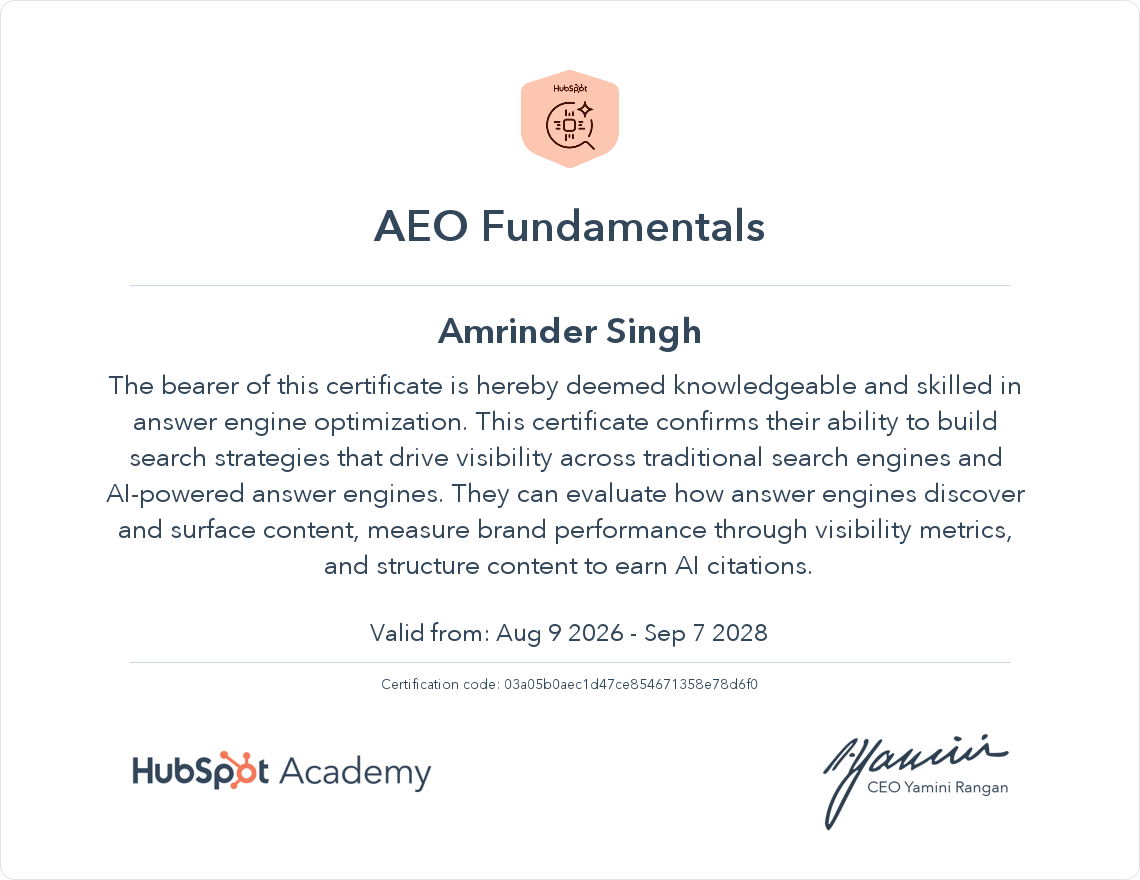
This is why I believe businesses should strengthen their SEO foundations while also considering Answer Engine Optimization (AEO) and Generative Engine Optimization (GEO).
In simple language:
- SEO helps your website become discoverable in search engines.
- AEO focuses on making your content useful and understandable for direct questions and answers.
- GEO focuses on improving the clarity, usefulness and credibility of your content so that it has a better opportunity to be surfaced or referenced in generative AI experiences.
These areas overlap. They should not be treated as three completely separate tricks or as a promise of inclusion in AI answers.
The goal is to build a website that genuinely helps people and communicates its expertise clearly.
4. What Makes a Strong Service Page in the AI Search Era?
At Digi Ustad, I would start by reviewing three important client service pages rather than trying to change an entire website at once.
Here is the approach I recommend.
First, explain the service clearly
A visitor should understand the service within a few seconds.
If the page is about website design, explain what the service includes, who it is for and how the process works.
Avoid vague statements such as “We provide world-class solutions for your business.”
Instead, explain the actual work, deliverables and benefits in straightforward language.
A clear page helps potential customers make decisions and gives search systems more useful context.
Second, answer the questions customers actually ask
Think about the questions people raise before contacting your business.
For a digital marketing agency, these might include:
- How does SEO work?
- How long can SEO take to produce results?
- What is included in a monthly SEO package?
- How do you measure progress?
- What information do you need from a client?
Answer these questions honestly.
If the answer depends on the industry, competition, website condition or budget, explain that. Do not promise a guaranteed first-place ranking or a fixed amount of traffic.
Useful answers can improve the visitor’s understanding and make the page more valuable.
Third, demonstrate real experience
Anyone can publish a page claiming to be an expert. Showing evidence is more convincing.
Where appropriate, include relevant case studies, project examples, genuine client feedback, certifications and explanations of your working process.
For example, a digital marketing agency could describe how it identified technical issues on a client’s website, improved internal linking and strengthened service-page content.
Only include results you can substantiate, and obtain permission before publishing confidential client information.
Expertise should be demonstrated, not simply claimed.
Fourth, make the page easy to navigate
Use meaningful headings, short paragraphs and descriptive links.
If you mention a related service, link to its relevant page. If you explain a technical term, link to a useful supporting article where appropriate.
For example, a page about local SEO could link to articles about Google Business Profile optimisation, local keyword research and local landing pages.
These links help visitors explore related information and help search engines understand the relationships between your pages.
Fifth, keep important information accurate
Review prices, service areas, contact details, business information and claims about your services.
Outdated information can confuse potential customers and weaken trust.
If your business serves Delhi, for example, make sure the page explains the relevant service area naturally instead of inserting the city name repeatedly into every sentence.
Write for the customer first.
5. What About Schema Markup and Technical SEO?
Schema markup can help search engines interpret certain information about a business, service, article or organisation.
For suitable pages, structured data may help communicate details such as the business name, service information, author or publication date.
However, schema markup does not guarantee that a page will appear in an AI Overview or be cited by an AI system.
The same principle applies to technical SEO.
Check that important pages can be crawled and indexed, that internal links work, that mobile users can navigate the site and that pages load reliably.
Use relevant structured data that follows Google’s guidelines. Avoid adding schema simply to chase AI visibility or marking up information that visitors cannot actually find on the page.
Technical quality supports discoverability, but it cannot replace helpful content or genuine expertise.
6. How Should Businesses Measure Results?
One common mistake is to judge every SEO improvement only by keyword rankings.
Rankings still matter, but they do not tell the whole story.
I recommend monitoring several indicators together:
Organic search performance: Use Google Search Console to review clicks, impressions, queries and the performance of individual pages.
Website engagement: Use analytics tools to understand which pages visitors view and whether they take useful actions, such as contacting the business or submitting an enquiry.
Lead quality: Track enquiries, phone calls and conversions rather than focusing only on the number of visitors.
AI visibility: Test relevant questions across available AI search experiences periodically. Record whether your business or website is mentioned, which pages are linked and how the results change over time.
Remember that AI answers can vary by query, location, language and time. Manual checks provide useful observations, but they are not a complete measurement of AI visibility.
Also, do not assume every AI-generated answer will send a visitor to your website. Some users will get the information they need without clicking any link.
The real business goal is not simply to be mentioned. It is to build a trustworthy presence that helps the right people discover, understand and choose your services.
7. A Practical Action Plan for the Next Seven Days
You do not need to rebuild your website immediately. Start with a focused review.
Day 1: Select three service pages. Choose pages that matter most to your business goals.
Day 2: Review the content. Check whether each page explains the service, its benefits, the process and the common customer questions.
Day 3: Check credibility. Add genuine examples, relevant experience, author details or other evidence where appropriate.
Day 4: Improve internal links. Connect each service page to relevant supporting articles and related services.
Day 5: Check technical basics. Review indexing, mobile usability, page performance, broken links and relevant structured data.
Day 6: Test real customer questions. Search Google and available AI experiences using questions your potential customers might ask. Record what appears and which sources are linked.
Day 7: Establish a baseline. Record current Search Console performance, enquiries and other useful metrics so you can compare results over time.
This is a starting point, not a promise of results within seven days. Meaningful SEO improvements can take longer, depending on the website and its competitive environment.
My Final Thoughts
Google’s latest changes are a useful reminder that search is not standing still.
AI-generated answers are becoming an important part of the discovery process, and Google is making further changes to how people find the websites and sources behind those answers.
For businesses, this creates an opportunity to improve the quality of their websites, make service information easier to understand and publish content that genuinely answers customer questions.
But there is no shortcut that guarantees inclusion in AI answers.
At Digi Ustad, my recommendation is straightforward: build a technically sound website, explain your services clearly, demonstrate real experience, answer customer questions and measure what matters to your business.
Do not create content just because you want an AI system to mention your brand. Create content because your customers need useful information.
When your website becomes a genuinely helpful resource, you give people—and search systems—better reasons to discover it.
Want to review your website’s search visibility? Visit Digi Ustad to learn more about our digital marketing services.