QUICK ANSWER — If You Only Have 30 Seconds After testing more than 50 SEO tools across a decade of real client work in Delhi and internationally, the one SEO tool I would keep if forced to delete everything else is Semrush. It is the only single platform that handles keyword research, technical audits, competitor analysis, backlink tracking, local SEO, content optimisation, and — critically in 2026 — AI visibility tracking across ChatGPT, Google AI Overviews, and Perplexity. No other tool comes close to covering that full range. This article explains exactly why — and what the serious alternatives are.
Let Me Be Honest With You First
I almost did not write this article.
Every SEO tools list on the internet reads the same way. Someone lists 15 tools, gives each one a star rating, concludes with ‘it depends on your needs,’ and leaves you exactly where you started — confused and still not knowing what to actually buy.
This article is different. It has one answer. One tool. And a real explanation of how I arrived at that answer after spending the last decade testing, subscribing to, cancelling, and re-subscribing to over 50 different SEO platforms.
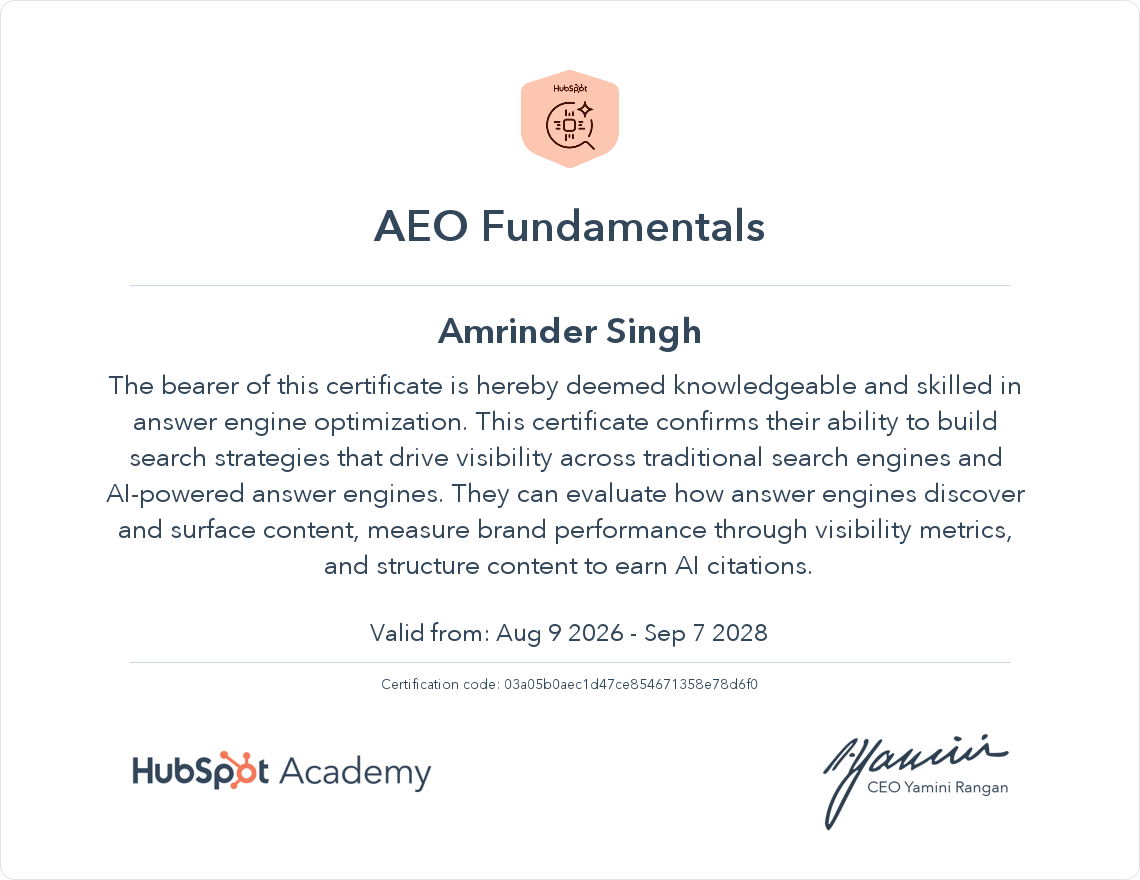
I am Amrinder Singh, known online as Digi Ustad. I am a Semrush-certified SEO specialist based in New Delhi. I have managed SEO campaigns for businesses across Delhi, India, the UK, USA, Canada, and Australia — from local restaurants in Lajpat Nagar to international e-commerce brands with millions of monthly visitors. SEO tools are not a hobby for me. They are the instruments I use every single working day.
Here is my honest answer.
The 50+ SEO Tools I Have Actually Used
Before I give you the answer, here is the context. Over 10 years, I have used, tested, or subscribed to all of the following categories of tools:
| Category | Tools Tested | Verdict |
|---|---|---|
| All-in-one SEO Suites | Semrush, Ahrefs, Moz Pro, SE Ranking, Ubersuggest, Mangools, SpyFu, Serpstat | Semrush wins on breadth |
| Rank Trackers | Nightwatch, AccuRanker, ProRankTracker, SERPWatcher, Advanced Web Ranking | Useful standalone, not essential |
| Technical SEO Crawlers | Screaming Frog, Sitebulb, DeepCrawl, ContentKing, Botify | Screaming Frog is excellent but narrow |
| Keyword Research Tools | Google Keyword Planner, Keywords Everywhere, KWFinder, LongTailPro, Soovle | Good supplements, not replacements |
| Backlink Tools | Majestic, Linkody, Monitor Backlinks, CognitiveSEO | Ahrefs beats all here, Semrush is close |
| Content SEO Tools | Clearscope, Surfer SEO, Frase, MarketMuse, NeuronWriter | Useful, but add-ons not foundations |
| Local SEO Tools | BrightLocal, Whitespark, Yext, Synup, GBP Native | BrightLocal is best in class — but narrow |
| Free Tools | Google Search Console, Google Analytics 4, Bing Webmaster, PageSpeed Insights | GSC is essential alongside a paid tool |
| AI SEO Tools | Search Atlas, Alli AI, RankIQ, Diib, Semrush AI Toolkit | Semrush AI Toolkit leads in 2026 |
After going through all of these categories — and spending tens of thousands of dollars across subscriptions over a decade — the tool I still open every single morning is Semrush.
Why Most SEO Tools Fail the ‘One Tool’ Test
The problem with every other tool on the market is the same: they are excellent at one thing but require you to open another tool the moment you need to do something adjacent.
Screaming Frog is the best technical crawler in the world. But the moment you need to research a keyword, you are opening another tab. Ahrefs has the most comprehensive backlink index on the internet — 35 trillion backlinks from 500 million referring domains. But its keyword research for Indian markets is weaker than Semrush, and it has no local SEO suite.
BrightLocal is the best tool specifically for local SEO and GBP management. But it cannot tell you anything about your competitors’ organic strategy, your site’s technical health, or your content gaps.
Google Search Console is free, accurate, and indispensable — but it is reactive. It tells you what happened. It does not tell you what to do next.
THE ‘ONE TOOL’ TEST — What I Required
To qualify as the one tool I could not live without, it had to pass all of these:
✓ Keyword research with accurate India/Delhi market data
✓ Competitor analysis — organic, paid, and content strategy
✓ Technical site audit with actionable fix priority
✓ Rank tracking across locations (including specific Delhi areas)
✓ Backlink monitoring and toxic link identification
✓ Local SEO — GBP insights and local rank tracking
✓ Content optimisation guidance
✓ AI visibility tracking (2026 requirement)
✓ Works for both clients and my own site
✓ Worth the price for a solo expert and small age
Only one tool passed every single point on that list.
The Verdict: Why Semrush Is the One Must-Have SEO Tool in 2026
Semrush is not perfect. I will tell you its weaknesses honestly in a later section. But it is the only platform that gets me from zero to a complete SEO strategy — for any client, in any industry, in any location — without ever needing to open a second platform to fill a gap.
Here is what that looks like in practice. When a new Delhi-based client comes to me, here is what I do inside Semrush before I even speak to them about strategy:
- Domain overview — instant snapshot of their organic traffic, keyword count, top pages, and Authority Score
- Competitor discovery — Semrush automatically identifies who their actual search competitors are (often not who they think)
- Keyword gap analysis — side-by-side comparison showing every keyword their competitors rank for that they do not
- Site audit — crawl the site for technical issues, prioritised by impact
- Backlink audit — identify any toxic links that could be suppressing rankings
- Position tracking setup — start tracking their target keywords across Delhi and specific neighbourhoods
- AI visibility check — see if they appear in Google AI Overviews, ChatGPT, or Perplexity for their key queries
That entire workflow — which used to require four or five different tools — now happens inside one platform. That is why it is the only tool I cannot live without.
7 Semrush Features That No Other Single Tool Replicates
These are the specific capabilities that keep me coming back to Semrush every day — and that I have not found matched by any other single tool in over a decade of testing.
Feature 1: Keyword Magic Tool
Semrush’s Keyword Magic Tool is the most powerful keyword research interface I have used. From a single seed keyword, it generates thousands of related keywords — classified by intent, grouped by topic cluster, filterable by difficulty and volume, and enriched with SERP feature data.
What makes it essential for Indian markets: it has strong coverage of India-specific search volumes, including city-level and regional data. When I am building a keyword strategy for a Delhi client, I can filter specifically for keywords with significant search volume in India, not just global data that is skewed towards US/UK audiences.
- Database size: 26 billion+ keywords across 142 databases
- Intent filter: Informational, commercial, navigational, transactional — in one click
- Keyword clusters: Automatic grouping of related keywords around a topic — saves hours of manual clustering
- SERP features: Shows which features appear for each keyword — featured snippets, local packs, video carousels
Feature 2: Site Audit — 140+ Technical Checks
Semrush’s Site Audit crawls your entire website and checks for 140+ technical and on-page SEO issues. What separates it from standalone crawlers like Screaming Frog is that it does not just find issues — it prioritises them by severity and impact, and explains exactly how to fix each one in plain language.
For my Delhi clients — many of whom have WordPress sites built by non-SEO developers — the Site Audit typically finds 20-40 actionable issues on the first crawl. Having everything in one tool means I can cross-reference audit findings directly with keyword and competitor data, which is impossible when using separate tools.
- Core Web Vitals monitoring: Tracks LCP, FID/INP, and CLS against Google’s thresholds
- Crawlability report: Identifies orphan pages, redirect chains, and crawl budget waste
- Internal linking analysis: Maps your entire internal link structure and identifies link equity leaks
- Scheduled crawls: Automatic weekly or monthly audits so you catch new issues as they appear
Feature 3: Position Tracking — Hyper-Local to City Level
For Delhi businesses, ranking nationally means nothing if you are not visible to people searching in your specific area. Semrush’s Position Tracking allows me to monitor rankings at the city, state, and even neighbourhood level.
I can set up separate tracking campaigns for South Delhi, North Delhi, Noida, and Gurgaon simultaneously — and see exactly where a client ranks in each location, on both desktop and mobile. No other all-in-one SEO suite handles local rank tracking at this granularity.
- Local pack tracking: Monitors Google Maps 3-pack positions alongside organic rankings
- Device segmentation: Separate desktop and mobile rankings in the same view
- Competitor comparison: Tracks up to 10 competitors’ rankings alongside yours in one dashboard
- Visibility score: A single percentage that summarises your overall ranking health across all tracked keywords
Feature 4: Backlink Analytics and Toxic Link Audit
Semrush has one of the largest backlink databases in the industry — 43 trillion URLs, compared to Ahrefs’ 35 trillion. More importantly for client work, the Backlink Audit tool automatically identifies toxic or spammy links that could be suppressing your rankings.
I have used this feature to rescue several Delhi business websites that had been hammered by negative SEO campaigns — a real problem for businesses in competitive local niches. The tool identifies toxic links, lets you remove them with one-click outreach requests, and creates disavow files for Google Search Console.
- Toxicity score: Every backlink is scored from 0-100 for spam risk
- Link building tool: Built-in outreach workflow for earning new backlinks (prospect finding, email templates, status tracking)
- Referring domain analysis: See the authority, traffic, and relevance of every domain linking to you
Feature 5: Competitor Intelligence — Beyond Just SEO
Semrush does something no other tool does as comprehensively: it lets you see your competitors’ entire digital marketing strategy — not just SEO, but also paid search, display advertising, social media, and content marketing.
This is invaluable when building strategy for Indian clients who are often competing against businesses with much larger marketing budgets. Understanding that a competitor is spending heavily on Google Ads for certain keywords tells me to target those keywords organically — because paid competition signals high commercial intent.
- Traffic analytics: Estimate a competitor’s monthly visits, traffic sources, and top pages
- Advertising research: See every Google Ad they are running, their ad copy, and estimated spend
- Organic research: Every keyword they rank for, every page driving their organic traffic
- Content gap: Side-by-side comparison showing keyword opportunities your competitors have that you do not
Feature 6: Local SEO Suite
This is where Semrush genuinely surprised me. The Local SEO tools — including listing management, GBP insights, and local rank tracking — are strong enough to handle most local SEO needs without a dedicated tool like BrightLocal.
For my Delhi-based service business clients, the Local SEO suite handles GBP performance tracking, review monitoring, citation audit, and local keyword tracking in one place. The only scenario where I still recommend BrightLocal as an add-on is for agencies managing 20+ location clients, where BrightLocal’s reporting templates save significant time.
- Listing management: Sync your NAP data across 70+ directories from a single dashboard
- GBP tracking: Monitor GBP impressions, calls, and direction requests alongside organic data
- Local heatmap: Visual map showing where in a city you rank for target keywords
- Review management: Monitor and respond to reviews from Google, Facebook, and other platforms
Feature 7: AI Visibility Tracking (The 2026 Game-Changer)
This is the feature that has made Semrush more valuable in 2026 than it was in any previous year. The AI SEO Toolkit tracks where your brand, content, and website appear across AI-generated responses in ChatGPT, Google AI Overviews, Perplexity, and Gemini.
As Google AI Overviews now appear in 25%+ of searches — and that percentage is growing rapidly in India — tracking AI visibility is no longer optional. No other all-in-one SEO suite I have tested tracks this as comprehensively as Semrush.
- AI brand mentions: How often your brand appears in AI-generated responses
- Competitor AI visibility: Compare your AI visibility against competitors across all major AI platforms
- Platform breakdown: Separate tracking for ChatGPT, Google AI Overviews, Perplexity, and Gemini
- Citation tracking: Which of your pages are being cited as sources in AI responses
How I Actually Use Semrush for Delhi Clients — Real Workflows
Theory is useful. Real workflows are more useful. Here is exactly how Semrush integrates into my actual work with clients in Delhi.
New Client Onboarding — First 48 Hours
When a new client comes to me, the first thing I do is run a complete Semrush domain overview. Within 10 minutes, I know their current organic traffic, their top 10 performing pages, their primary search competitors, their Authority Score, and their backlink profile health. This used to require four different tools and 2-3 hours. Semrush condenses it into a single dashboard.
Monthly SEO Reporting
My monthly client reports are built almost entirely from Semrush data. Position tracking shows keyword movement. Traffic analytics shows organic visit estimates. Backlink data shows new and lost links. Site audit shows technical health score changes. The AI visibility tracker shows whether their content is being cited in AI Overviews. Every number I need for a comprehensive monthly report comes from one source.
Competitor Attack Strategy
When a client tells me a specific competitor is dominating their market, I open Semrush’s Organic Research for that competitor and export every keyword they rank for in the top 20 positions. I then run a Keyword Gap analysis to find every keyword they rank for that my client does not. This list becomes the content roadmap for the next 6 months. I have used this exact workflow to double organic traffic for three Delhi-based clients in the past 18 months.
Local SEO Campaigns
For a restaurant in Connaught Place, a CA firm in South Delhi, or a dental clinic in Dwarka — the local SEO workflow in Semrush covers everything: setting up hyper-local position tracking, identifying local keywords their competitors rank for, auditing their GBP completeness, and monitoring their local citations. The only step that sits outside Semrush is the physical GBP management — which I do directly in the Google Business Profile dashboard.
What About Google Search Console? Ahrefs? Screaming Frog?
Let me be precise about these tools because ‘Semrush is the one tool’ does not mean the others are useless. Here is exactly how they fit into my workflow.
| Tool | My Assessment |
|---|---|
| Google Search Console | Essential — and free. Use it alongside Semrush, not instead of it. GSC provides first-party Google data that no third-party tool can fully replicate. It tells you what happened, while Semrush helps determine what to do next. |
| Ahrefs | The strongest backlink analysis platform available. If your focus is link building and competitor backlink research, Ahrefs is hard to beat. For a complete SEO workflow, however, Semrush offers broader functionality. |
| Screaming Frog | The gold standard for technical SEO audits. Excellent for large websites, crawl diagnostics, redirect audits, and uncovering technical issues that other tools may miss. |
| BrightLocal | One of the best local SEO reporting tools available. Particularly useful for agencies managing multiple local businesses. However, it lacks comprehensive keyword research and backlink capabilities. |
| Surfer SEO / Clearscope | Powerful content optimization platforms that help improve topical coverage and content quality. Excellent additions to an SEO stack, but they should complement — not replace — a full SEO suite. |
The Honest Weaknesses of Semrush
I am a Semrush affiliate and a certified Semrush user. But this is an honest review, so here are the real weaknesses:
- Price: At $139.95/month for the Pro plan, Semrush is expensive for individual freelancers and small Indian businesses. The annual plan at $117.33/month is more manageable. For budget-conscious Indian users, SE Ranking (starting at around $44/month) covers 80% of what Semrush does at roughly 30% of the price.
- Backlink index depth: Ahrefs still has a more refined backlink index for pure link analysis. If link building is your primary activity, Ahrefs’ data is slightly more trustworthy for assessing individual link quality.
- Learning curve: Semrush has 55+ tools. When I first started using it in the early days, it was overwhelming. New users typically spend 2-3 weeks before they feel confident navigating the platform. The learning investment is real.
- Data accuracy for small Indian sites: For very small or new Indian websites with limited online presence, Semrush’s traffic estimates can be inaccurate. GSC remains the gold standard for traffic data on small sites.
- AI toolkit is new: The AI visibility tracking features are genuinely innovative but are still evolving. Some features that were promised at launch are still being rolled out. This is a live investment, not a finished product.
Semrush Pricing for Indian Users — What You Actually Need
Here is the honest breakdown of which Semrush plan is right for different users:
| Plan | Monthly Price | Best For |
|---|---|---|
| Pro | $139.95 / ~₹11,700 | Freelancers and solo consultants managing up to 5 projects |
| Guru | $249.95 / ~₹20,900 | Small agencies managing up to 15 projects with content marketing needs |
| Business | $499.95 / ~₹41,800 | Large agencies and in-house teams managing 40+ projects |
| Annual Discount | Save ~16% | Pay yearly — Pro drops to ~\$117/month (~₹9,800/month) |
| Free Trial | 14 days free | Full Pro access — enough time to evaluate the platform fully |
DIGI USTAD'S RECOMMENDATION FOR INDIAN USERS: If you are a solo SEO consultant or small agency in India: Start with the Pro plan annual subscription. The 14-day free trial gives you enough time to run full audits and keyword research for your current clients before committing. If you are a business owner managing your own SEO: Start with the free trial, focus on Site Audit and Position Tracking for your most important keywords, and decide after 14 days whether the monthly cost is justified by the insights. If you are on a tight budget: SE Ranking is a strong alternative at roughly ₹3,700/month. It covers keyword research, rank tracking, and basic competitor analysis. It is not as deep as Semrush but it is the best value tool in the market.
How to Get Maximum Value from Semrush in Your First 30 Days
If you are new to Semrush or want to get more from your existing subscription, here is the exact sequence I recommend:
- Week 1 — Diagnose: Run a Site Audit on your website. Fix every Critical and Error level issue before doing anything else. Technical SEO is the foundation. Nothing else works properly if Google cannot crawl and index your pages correctly.
- Week 1 — Understand: Run a Domain Overview on your top 3 competitors. Export their top organic keywords. This is your first content opportunity list.
- Week 2 — Research: Use the Keyword Magic Tool to build your core keyword list. Organise it by intent cluster. Identify 10-15 target keywords for your most important pages.
- Week 2 — Track: Set up Position Tracking for your target keywords with your specific location (city and district for Delhi businesses). This is your progress measurement baseline.
- Week 3 — Content: Run a Keyword Gap analysis against your top competitor. Add the best gaps to your content calendar. This is the fastest path to new ranking opportunities.
- Week 3 — Links: Run a Backlink Audit. Check for toxic links. Review your most valuable existing backlinks. Identify 5-10 link building targets using the Link Building Tool.
- Week 4 — AI Visibility: Check your AI visibility score. See whether your content appears in Google AI Overviews for your target queries. If not, use the insights to restructure your top pages for AI citation.
- Week 4 — Report: Pull your first month’s data into a reporting view. Compare starting positions to current positions. Use this as evidence of progress for clients or management.
Frequently Asked Questions
Is Semrush worth it for a small business in Delhi?
It depends on your monthly SEO budget and how seriously you take organic search as a growth channel. If you are investing in SEO professionally, Semrush pays for itself with the first insight it gives you — a competitor’s keyword list, a technical issue costing you rankings, or a content gap worth a new page. If you are casually curious about SEO, the free version of Google Search Console combined with the free tiers of Ubersuggest or Semrush is sufficient.
Is Ahrefs better than Semrush?
For pure backlink analysis: yes, Ahrefs is marginally better. For the complete SEO workflow — keyword research, technical audit, rank tracking, local SEO, content tools, PPC research, and AI visibility tracking — Semrush is more comprehensive. Most professionals who choose Ahrefs over Semrush are doing so because they find Ahrefs’ interface cleaner or because their primary work is link building. Both are excellent tools. If I could only have one, it would be Semrush.
Can I use Semrush for free?
Semrush offers limited free access — 10 keyword research requests per day and some domain analytics. There is also a 14-day free trial of the Pro plan that gives full access. For meaningful SEO work, you need a paid subscription. The free access is useful for occasional checks but not for running client campaigns or comprehensive audits.
What is the best SEO tool for beginners?
For a complete beginner in India who wants to start learning SEO practically: start with Google Search Console (free, first-party data) and the free version of Ubersuggest (simple interface, basic keyword data). Once you are ready to work professionally or manage real client campaigns, move to Semrush. The learning curve is steeper but the capability gap is enormous.
Does Semrush work well for local SEO in India?
Yes — Semrush’s local SEO coverage for Indian markets has improved significantly over the past two years. Position tracking for Indian cities including Delhi, Mumbai, Bengaluru, Chennai, and Hyderabad is accurate. Keyword data for Indian market searches is comprehensive. The local pack tracking feature works well for Delhi neighbourhood-level targeting. The one area where I still supplement Semrush for Indian clients is GBP review management — I use Google’s native tools for that.
What SEO tools does Digi Ustad use daily?
My daily stack: Semrush (primary tool for everything), Google Search Console (first-party data validation), Google Analytics 4 (traffic and conversion tracking), and PageSpeed Insights (quick mobile performance checks). For specific client projects, I occasionally add Screaming Frog for deep technical crawls and BrightLocal for high-volume local reporting. But 90% of my SEO work is done inside Semrush.
The Final Verdict — After 10 Years and 50+ Tools
I have tried to replace Semrush three times in 10 years. Each time, I ended up back on it within six weeks. Not because of habit, and not because of the Semrush certification on my profile — but because nothing else handles the full SEO workflow as completely in one place.
The SEO tools market has fragmented. There are better rank trackers than Semrush. There are better backlink tools than Semrush. There are better technical crawlers than Semrush. There are better content optimisation tools than Semrush. But there is no single tool that does all of these at a level of quality that eliminates the need for anything else — except Semrush.
In 2026, with AI Overviews reshaping the search landscape and AI visibility becoming a new dimension of SEO performance, the gap between Semrush and every other single tool has grown wider, not narrower. The AI SEO toolkit that now ships inside Semrush tracks brand mentions across ChatGPT, Google AI Overviews, and Perplexity — something no other all-in-one platform does as comprehensively.
If you want my one recommendation: start with the 14-day Semrush free trial. Run a site audit on your website. Run a competitor analysis on your top competitor. Check your keyword gap. Within those first 48 hours, you will have more actionable SEO intelligence than most businesses act on in a year.
That is the power of having the right tool.
ABOUT THE AUTHOR: Amrinder Singh, known as Digi Ustad, is a Semrush-certified SEO specialist based in New Delhi with 10+ years of hands-on experience managing SEO campaigns for businesses across India, the UK, USA, Canada, and Australia. He specialises in local SEO, content strategy, technical SEO, and AI-era search optimisation. He has managed campaigns across real estate, healthcare, ecommerce, legal, and professional services.